Git Survival Guide
5 Starting Commands for ATOC 4815/5815
CU Boulder ATOC
Spring 2026
Git and Github Stuff
Today’s Objectives
- Git and Github stuff
Reminders
Due Friday at 12pm:
- Lab 4
Office Hours:
Will: Tu 11:15-12:15p Aerospace Cafe
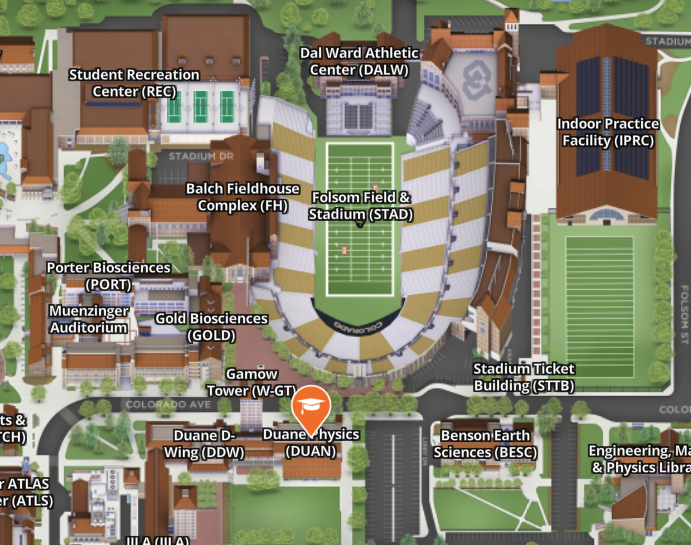
Aiden: M / W 330-430p DUAN D319
ATOC 4815/5815 Playlist
ATOC 4815/5815 Midterm Playlist
Spotify Playlist: Midterm01_ATOC4815
- here → playlist
Git Is Confusing.
If you’re thinking any of these:
- “I have no idea what Git is”
- “I’m afraid I’ll break something / lose my work”
- “Why can’t I just email my files?”
You’re in good company.
- Most scientists feel this way, and don’t use it
- this is a bad perspective
- Git’s documentation is notoriously bad
- The terminology is confusing on purpose (it seems)
- For today, you only need 5 commands
What Is Git?
Git is a save system for your code.
Think of it like checkpoints in a video game:
- You play the game (write code)
- You hit “save” at important moments (commit)
- If you mess up, you can load a previous save
- Git remembers every save you ever made
In Summary: Git tracks changes to your files so you can go back in time if something breaks.
Git vs GitHub (Not the Same Thing)
| Git | GitHub | |
|---|---|---|
| What | Tool on your computer | Website (github.com) |
| Does | Tracks changes to files | Hosts repositories online |
| Needs internet? | No | Yes |
Git is the time machine. GitHub is the cloud backup.
You can use Git without GitHub (just local saves). You can’t use GitHub without Git.
The 5 Commands
Today, you need exactly these 5 commands:
| # | Command | Plain English |
|---|---|---|
| 1 | git clone |
Download a project |
| 2 | git status |
What changed? |
| 3 | git add |
Pick files to save |
| 4 | git commit |
Save a snapshot |
| 5 | git push / git pull |
Upload / Download |
We’ll cover more commands next week.
I was pretty paranoid of git
You cannot permanently break anything today.
Why?
git statusis 100% read-only. It never changes anything.git addandgit commitonly save things. They don’t delete.git pushuploads your saves.- Worst case scenario: Delete the folder and clone again. Fresh start in 10 seconds.
The nuclear option always works:
If something goes wrong, this fixes it. Every time.
Warning: rm -rf permanently deletes files — no trash can, no undo. Always double-check you’re in the right folder first: run pwd and ls before deleting anything.
One-Time Setup
Installing Git
Check if Git is already installed:
If you see a version number (e.g., git version 2.39.0), you’re good!
If not installed:
| Platform | How to install |
|---|---|
| Mac | Open Terminal, type git. macOS will prompt you to install Xcode Command Line Tools. Click Install. |
| Windows | Download from git-scm.com. Use all default settings. This gives you Git Bash. |
| Linux | sudo apt install git (Ubuntu/Debian) or sudo dnf install git (Fedora) |
Mac users: If you already installed Homebrew, brew install git works too.
Configure Git (Do This Once)
Tell Git who you are – this labels your saves with your name:
GitHub Authentication
You need to connect your computer to GitHub so you can upload (push) your work.
The easy way – VS Code handles it for you:
- Make sure you have a GitHub account (free)
- The first time you
git pushorgit pull, VS Code will pop up a browser window - Log in to GitHub and click Authorize
- Done! VS Code remembers your login.
What this looks like: A browser tab opens asking you to sign in to GitHub. You’ll see a page titled “Authorize Visual Studio Code.” Click the green Authorize button. The browser will say “You can close this tab”
What about the terminal? Modern Git on Mac and Windows includes Git Credential Manager, which also opens a browser window automatically — same process, no token needed. If you’re asked for a “password” in the terminal, it means your Git is outdated — come to office hours and we’ll update it.
Using Git in VS Code: The Terminal
VS Code has a built-in terminal – this is where you’ll run Git commands.
Open it:
- Keyboard:
Ctrl+`(backtick key, below Escape) - Menu: Terminal > New Terminal
- Mac shortcut:
Cmd+`
The terminal appears at the bottom of VS Code. It works exactly like a standalone terminal.
┌─────────────────────────────────────┐
│  VS Code Editor                     │
│  (your code here)                   │
│                                     │
├─────────────────────────────────────┤
│  TERMINAL                           │
│  $ git status                       │
│  On branch main                     │
│  nothing to commit, working tree    │
│  clean                              │
└─────────────────────────────────────┘
Tip: Make sure the terminal is in your project folder! Check with pwd (Mac/Linux) or cd (Windows).
Using Git in VS Code: Source Control Panel
VS Code also has a visual Git interface – no terminal needed for basic operations.
Open it:
- Click the branch icon in the left sidebar (3rd icon)
- Or press
Ctrl+Shift+G(Cmd+Shift+Gon Mac)
What you’ll see:
- Changes – files you modified (like
git status) +button next to a file – stages it (likegit add)- Message box at top – type your commit message
- Checkmark button – commits (like
git commit)
The visual workflow:
- Edit files normally
- Open Source Control panel
- Click
+next to changed files - Type a commit message
- Click the checkmark to commit
- Click
...menu > Push to upload
Use whichever you prefer! Terminal commands and the Source Control panel do the same thing. I use terminal commands because they work everywhere (servers, other editors, etc.).
Practice Checkpoint: Setup
Do this now :
- Open VS Code and open the built-in terminal (
Ctrl+`) - Check Git is installed:
git --version - Run
git config --global user.name "Your Name"(use your real name) - Run
git config --global user.email "you@colorado.edu"(use your CU email) - Verify:
git config --global user.nameprints your name
Done? Give me a thumbs up.
Command 1: Fork + Clone
First: Fork the Repository
Forking makes your own personal copy on GitHub that you have full permission to push to.
- Go to github.com/WillyChap/atoc4815_git
- Click the Fork button (top right)
- Click Create fork
- You now have your own copy at
github.com/YOUR_USERNAME/atoc4815_git
Why fork? The original repo belongs to me. You can’t push to it. Your fork belongs to you, thus you can make changes!
git clone = Download Your Fork
Clone copies your fork from GitHub to your computer:
Replace YOUR_USERNAME with your actual GitHub username.
What just happened?
- Git created a new folder called
atoc4815_git - It downloaded all the files from your fork
- It set up a connection back to your fork (so you can push later)
What’s Inside?
Practice Checkpoint: Fork + Clone
Do this now:
- Go to github.com/WillyChap/atoc4815_git and click Fork
- Open your terminal (VS Code:
Ctrl+`) - Navigate to where you want the project:
cd ~/ATOC4815 - Clone your fork:
git clone https://github.com/YOUR_USERNAME/atoc4815_git.git - Run:
cd atoc4815_git - Run:
ls– you should see the files listed on the previous slide
Raise your hand if you see the files. If not, let’s troubleshoot.
Command 2: Status
git status = Your Safety Net
This is the most important command
Run it all the time. Before you do anything. After you do anything.
Right now, it should say:
On branch main
Your branch is up to date with 'origin/main'.

nothing to commit, working tree clean
Translation: “Everything is saved. Nothing has changed.”
Make a Change, Then Check Status
Open boulder_temperatures.py in your editor and add your name:
Reading git status – Translation Table
| Git says… | Translation |
|---|---|
nothing to commit, working tree clean |
Everything is saved. |
Changes not staged for commit |
You changed files but haven’t told Git yet |
Changes to be committed |
Files are staged and ready to save |
Untracked files |
New files that Git doesn’t know about yet |
Your branch is ahead of 'origin/main' |
You saved locally but haven’t uploaded to GitHub |
Don’t memorize this. Just run git status and read the output. Git tells you what to do!
Practice Checkpoint: Status
Do this now:
- Run
git status– should say “clean” - Open
boulder_temperatures.pyand add your name toSTUDENT_NAME - Save the file
- Run
git statusagain – should say “modified: boulder_temperatures.py”
See the change? That means Git is tracking your work.
Commands 3 & 4: Add + Commit
Saving in Git is Two Steps
Why two steps? Think of it like mailing a package:
Step 1: git add
Pack items into the box
- Pick which files to include
- You can add one file or many
- Nothing is saved yet!
Why not one step? Sometimes you change 5 files but only want to save 3 of them. git add lets you pick.
git add in Detail
Stage specific files:
After git add, run git status:
Changes to be committed:
    modified:   boulder_temperatures.py
Translation: “This file is packed in the box, ready to be saved.”
Heads up about git add .: This adds everything — including junk files like __pycache__/, .DS_Store, and temporary files. For now, add files by name. Next week we’ll learn .gitignore to handle this properly.
git commit in Detail
Save a snapshot with a message:
The -m flag means “message.” The message goes in quotes.
After committing, run git status:
nothing to commit, working tree cleanTranslation: “Everything is saved.”
Good vs Bad Commit Messages
Good messages:
Short, describes what you did.
Rule of thumb: Start with a verb. What did you DO?
Add, Fix, Update, Complete, Remove, Implement…
Commit size rule: If your commit message needs more than one sentence, you probably waited too long to commit. Commit early. Commit often.
Mantra: Status-Add-Commit-Status (SACS)
Every time you finish a chunk of work, do this:
The bookend git status calls are your safety net:
- Before: Make sure you know what you’re saving
- After: Confirm everything is clean
Common Beginner Mistake
You will do this at least once:
nothing to commit, working tree cleanPractice Checkpoint: Add + Commit
Do this now (you should already have your name in boulder_temperatures.py):
git status– see your modified filegit add boulder_temperatures.pygit status– file should now be “staged” (green)git commit -m "Add my name to boulder analysis"git status– should say “working tree clean”git log --oneline– see your save in the history!
You just made your first commit! Run git log --oneline — you should see something like:
a1b2c3d Add my name to boulder analysis
f4e5d6c Initial commit
That’s your save history. Every commit you make shows up here.
You can also try git log --oneline --graph — even in simple projects, this shows how your saves build over time.
Command 5: Push & Pull
Your Computer vs GitHub
Git has two copies of your project:
    Your Computer                    GitHub
    (local)                          (remote)
   ┌──────────────┐                ┌──────────────┐
   │ Your files    │    git push    │ Your files    │
   │ Your commits  │ ────────────> │ Your commits  │
   │               │               │               │
   │               │   git pull    │               │
   │               │ <──────────── │               │
   └──────────────┘                └──────────────┘
git push= Upload your commits to GitHubgit pull= Download any updates from GitHub
git push = Upload to GitHub
After committing, upload your work:
What happens:
- Your commits are copied to GitHub
- Anyone with access can see them
- Your work is backed up in the cloud
If git push fails, it usually means you need to git pull first (someone else pushed changes). We’ll deal with that later – for now, you’re the only person working on this repo.
git pull = Download from GitHub
If you work on multiple computers, or if the I update something:
What happens:
- Downloads any new commits from GitHub
- Updates your local files
- Run this at the start of a work session
Simple rule:
git pullwhen you SIT DOWN to workgit pushwhen you STAND UP from working
Practice Checkpoint: Push
Do this now:
- Make sure your earlier commit is saved:
git status(should be clean) - Push to GitHub:
git push - Check status:
git status
Go to your fork on GitHub in your browser:
github.com/YOUR_USERNAME/atoc4815_git
Can you see your commit? (Look at the commit history – your fork is yours, so your push always works!)
Practice Checkpoint: Pull
Now let’s practice git pull — make a change on GitHub, then download it:
- On GitHub, open your fork’s
README.mdand click the pencil icon (edit) - Add a line at the bottom:
Edited on GitHub by [your name] - Click Commit changes (green button) — this commits directly on GitHub
- Back in your terminal:
git pull - Open
README.mdlocally — your edit from GitHub is now on your laptop!
That’s the full loop: push uploads, pull downloads. You’ll use git pull every time you sit down to work.
The Complete Workflow
All 5 Commands, One Page
| Step | Command | When | Safe? |
|---|---|---|---|
| 0 | git clone <url> |
Once, to download the project | Yes |
| 1 | git status |
All the time! Before and after everything | 100% |
| 2 | git add <file> |
When you want to stage changes | Yes |
| 3 | git commit -m "msg" |
When you want to save a snapshot | Yes |
| 4 | git push |
When you want to upload to GitHub | Yes |
| 4 | git pull |
When you want to download from GitHub | Yes |
Your Daily Homework Workflow
# Start of session
cd ~/ATOC4815/homework-3
git pull                              # Get any updates

# ... do your work in your editor ...

# When you finish a chunk
git status                            # What changed?
git add homework3_problem1.py         # Stage it
git commit -m "Solve problem 1"       # Save it
git status                            # Confirm

# ... do more work ...

git status
git add homework3_problem2.py
git commit -m "Solve problem 2"
git status

# End of session
git push                              # Upload everything
Full Practice Exercise
Exercise: The Full Git Cycle
This exercise is about practicing the Git workflow. The Python is straightforward — focus on the commands.
Open denver_wind_analysis.py and complete the three TODO functions. You already know how to do this (Week 1–2 Python).
The real exercise — commit after EACH function, not all at once:
# Function 1: average_wind_speed()
# ... write the code, test with: python denver_wind_analysis.py ...
git status
git add denver_wind_analysis.py
git commit -m "Implement average wind speed calculation"

# Function 2: count_advisory_days()
# ... write the code, test ...
git add denver_wind_analysis.py
git commit -m "Add advisory day counter"

# Function 3: windiest_day()
# ... write the code, test ...
git add denver_wind_analysis.py
git commit -m "Add windiest day finder"

# Upload all three commits at once
git push
Check your history: git log --oneline — you should see 3 new commits, each describing one function.
Exercise: Verify on GitHub
After pushing, go to your fork on GitHub:
github.com/YOUR_USERNAME/atoc4815_git
- Click on commits — do you see your 3 separate commits?
- Click on one commit — GitHub shows you exactly what changed (green = added, red = removed)
- This is why good commit messages matter — you can see your work history at a glance
Bonus: Click on denver_wind_analysis.py on GitHub, then click Blame (right side). This shows who wrote each line and when. Imagine this with 5 collaborators — that’s why Git exists.
What’s Coming Next
Today: 5 commands (clone, status, add, commit, push/pull)
Next time: The full Git toolkit
- Branches – work on multiple things at once
- Merge conflicts – what happens when two people edit the same file
- Pull requests – how to propose changes on GitHub
.gitignore– telling Git to skip certain files (thengit add .becomes safe!)- History – looking at past commits with
git log
See the full version: Git for Scientific Software Development
Resources
Cheat Sheet
100% Safe (read-only):
These never change anything. Run them whenever you want.
Getting Help
When you’re stuck:
- Run
git statusand read the output - Check the practice repo README for the cheat sheet
- Ask a classmate
- Come to office hours: Tu 11:15-12:15p, Th 9-10a (Aerospace Cafe)
- Email: wchapman@colorado.edu
Useful websites:
- Oh Shit, Git! – fixes for common mistakes (real name of a real website)
- GitHub Docs – official documentation
- Git Cheat Sheet (PDF)
Core Idea to Remember
Git is a time machine for your research.
Every commit is a checkpoint.
Every push is a backup.
Every pull is synchronization.
You cannot break anything that cannot be fixed by cloning again.
Status. Add. Commit. Push.
Questions?
Will Chapman | wchapman@colorado.edu | willychap.github.io
Lab: Put Your Lorenz Project on GitHub
Lab Assignment:
This week’s lab: Put your lorenz_project/ from Week 5.5 under version control on GitHub.
- Go to github.com and click New repository (green button, top right)
- Name it
lorenz-project - Leave it Public, do NOT add a README or
.gitignore(we’ll add our own) - Click Create repository
- GitHub will show you a URL — copy it
Lab: Add, Commit, Push Your Code
Now use the workflow you just learned — one commit per file:
git status                              # See all your untracked files

git add integrators.py
git commit -m "Add Euler integration functions"

git add lorenz63.py
git commit -m "Add Lorenz63 class with run and run_ensemble"

git add plotting.py
git commit -m "Add plotting utilities for attractor and ensemble"

git add run_lorenz_ensemble.py
git commit -m "Add driver script for 3-panel ensemble figure"

git push                                # Upload everything to GitHub
Verify on GitHub: go to github.com/YOUR_USERNAME/lorenz-project — you should see your 4 files and 4 separate commits, each with a clear message.
Lab: Add Your Figure
If you have your ensemble figure from Week 5.5, add that too:
Check git log --oneline:
e5f6a7b Add 3-panel ensemble predictability figure
d4c3b2a Add driver script for 3-panel ensemble figure
c3b2a1f Add plotting utilities for attractor and ensemble
b2a1f0e Add Lorenz63 class with run and run_ensemble
a1f0e9d Add Euler integration functions
Five clean commits. Your Lorenz project now has a full history on GitHub.
Lab Deliverables
Submit on Canvas:
- The URL to your GitHub repo:
github.com/YOUR_USERNAME/lorenz-project - A screenshot of your commit history on GitHub (click “commits” on the repo page)
Grading:
| Item | Points |
|---|---|
| Repo created and accessible on GitHub | 20% |
All 4 .py files committed separately (not one giant commit) |
40% |
| Clear, descriptive commit messages (start with a verb) | 20% |
| Figure committed and visible in repo | 10% |
git log --oneline screenshot shows clean history |
10% |
This repo is yours for the rest of the semester. Next week we’ll add a .gitignore, create branches, and learn to collaborate. Everything you build from here goes into this repo.

ATOC 4815/5815 Git Survival Guide